

DEREK BUCKNER
Recent Still Lifes
Derek Buckner's new still life paintings mark a quiet yet compelling evolution in his practice. Known for his majestic industrial landscapes—works that captured the scale, atmosphere, and poetry of the built environment—Buckner has, in recent years, turned inward. Following his most recent series of intimate interior scenes, these paintings continue that trajectory, moving deeper into the domestic realm. They are meditations on the quotidian: everyday objects reconsidered and made newly resonant.
The shift began, true to his practice, with observation. A sheet of crumpled tinfoil reflecting light beneath a cluster of green onions revealed an unexpected complexity—a kind of natural abstraction embedded within the ordinary. From there, Buckner began assembling compositions with care: vegetables, glassware, vintage textiles, and found materials chosen for their texture, pattern, and capacity to catch and redirect light.
The lineage of still life painting is present but lightly worn. One senses the compositional restraint of Chardin, the meditative object-world of Morandi, and the painterly directness of Édouard Manet—that ability to let the hand remain visible, to allow paint itself to carry feeling and force. Buckner's surfaces are alive with this sensibility. Drapery folds into itself, patterns collide and resolve, and materials layer one atop another, creating compositions that feel both deliberate and discovered.
Often viewed from slightly above, these works depart from the traditional still life plane and draw the viewer into a more contemporary, almost cinematic perspective. The result is an intimacy that feels unguarded—as though we have come upon a table mid-thought.
"I've been interested in slowing down enough to really see what's in front of me—to find something expansive in something close at hand," Buckner says.
Elsewhere, he notes: "I'm less interested in the objects themselves than in how they relate—how light moves across a surface, how fabric folds against another fabric. The painting really happens in those relationships."
In Buckner's hands, the ordinary is transformed—held in still light, and made quietly, insistently beautiful.
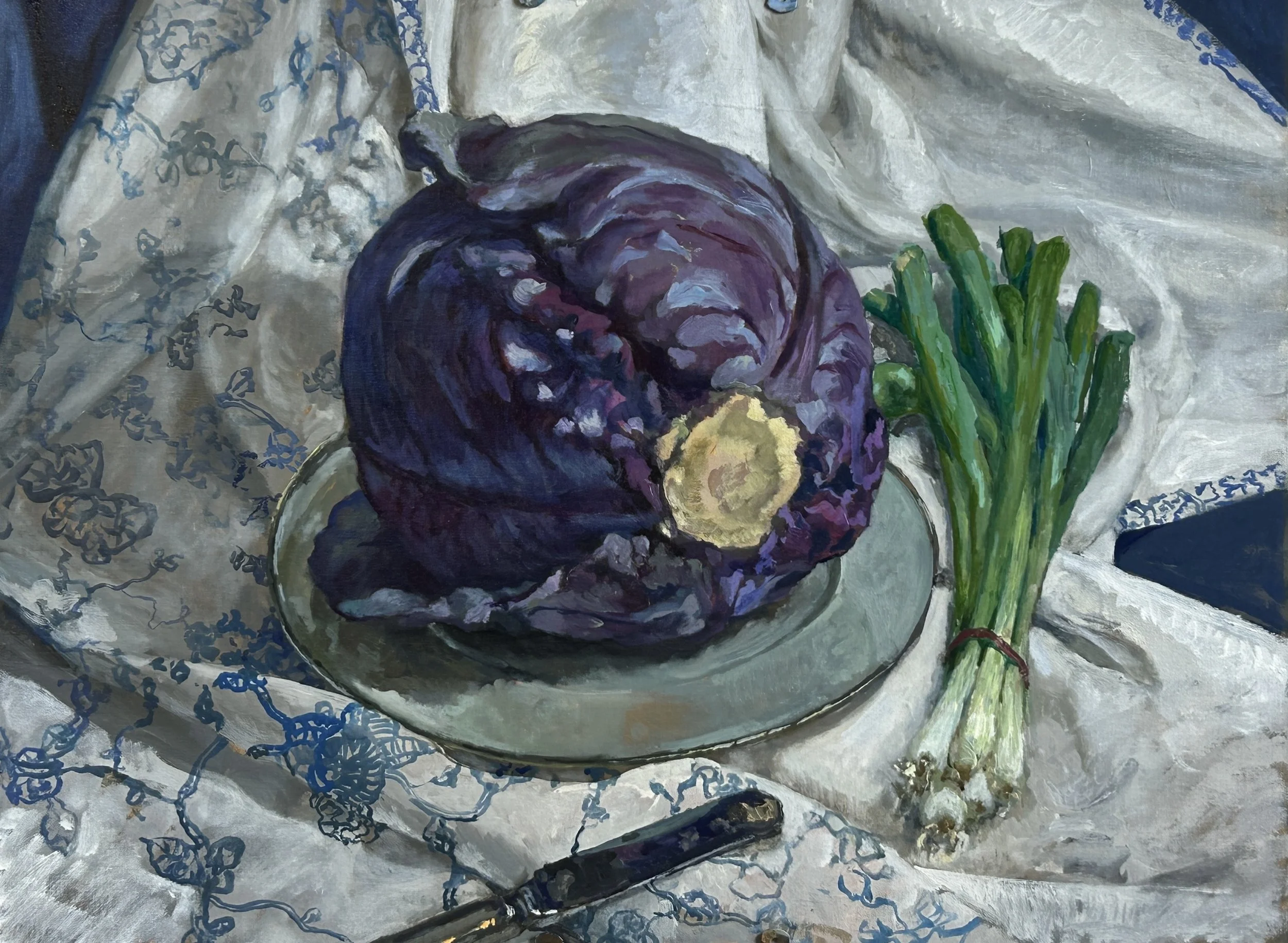
Cabbage and Green Onions | Oil on Canvas | 18 x 24 inches | 2026
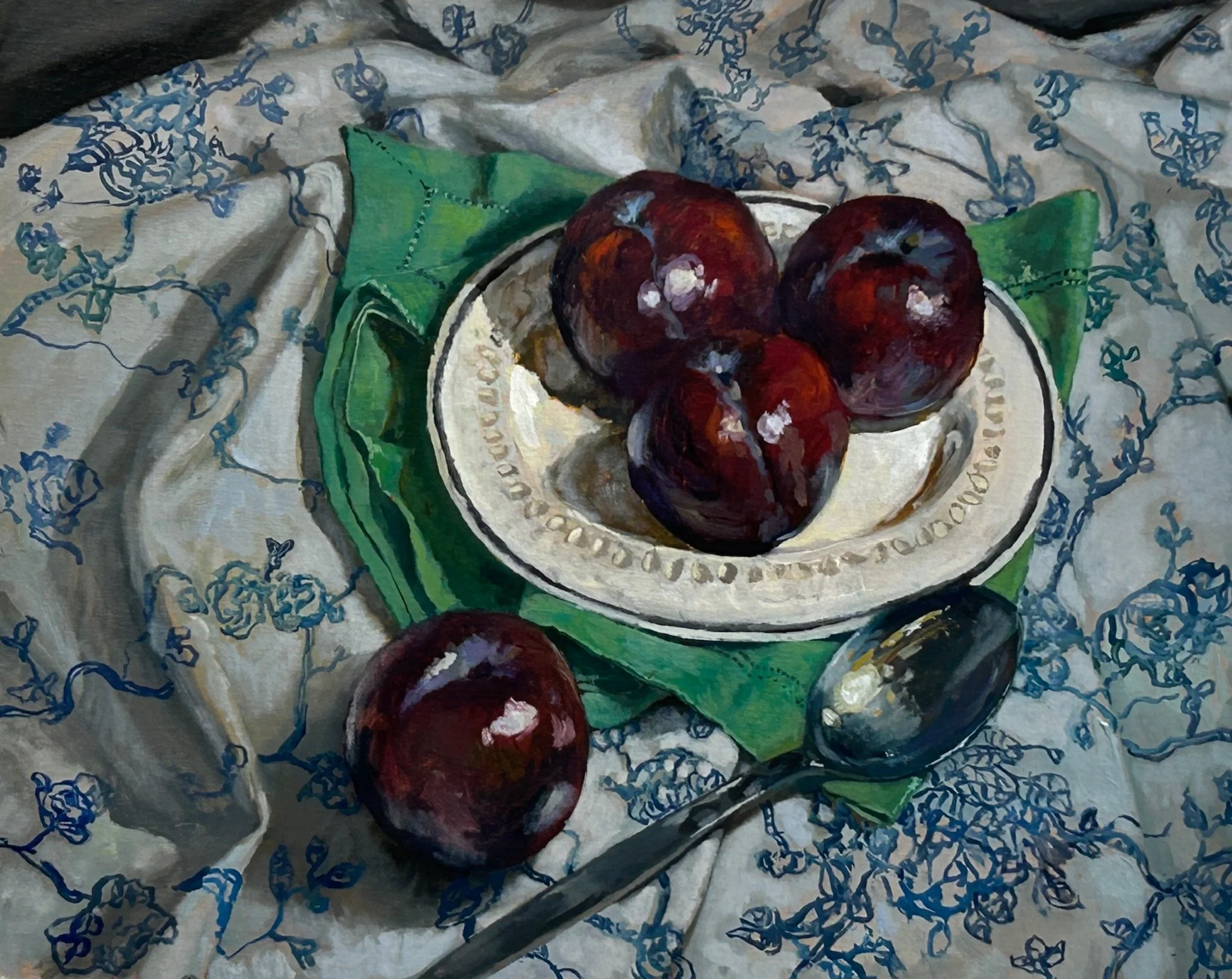
Plums | Oil on Canvas | 16 x 20 inches | 2026
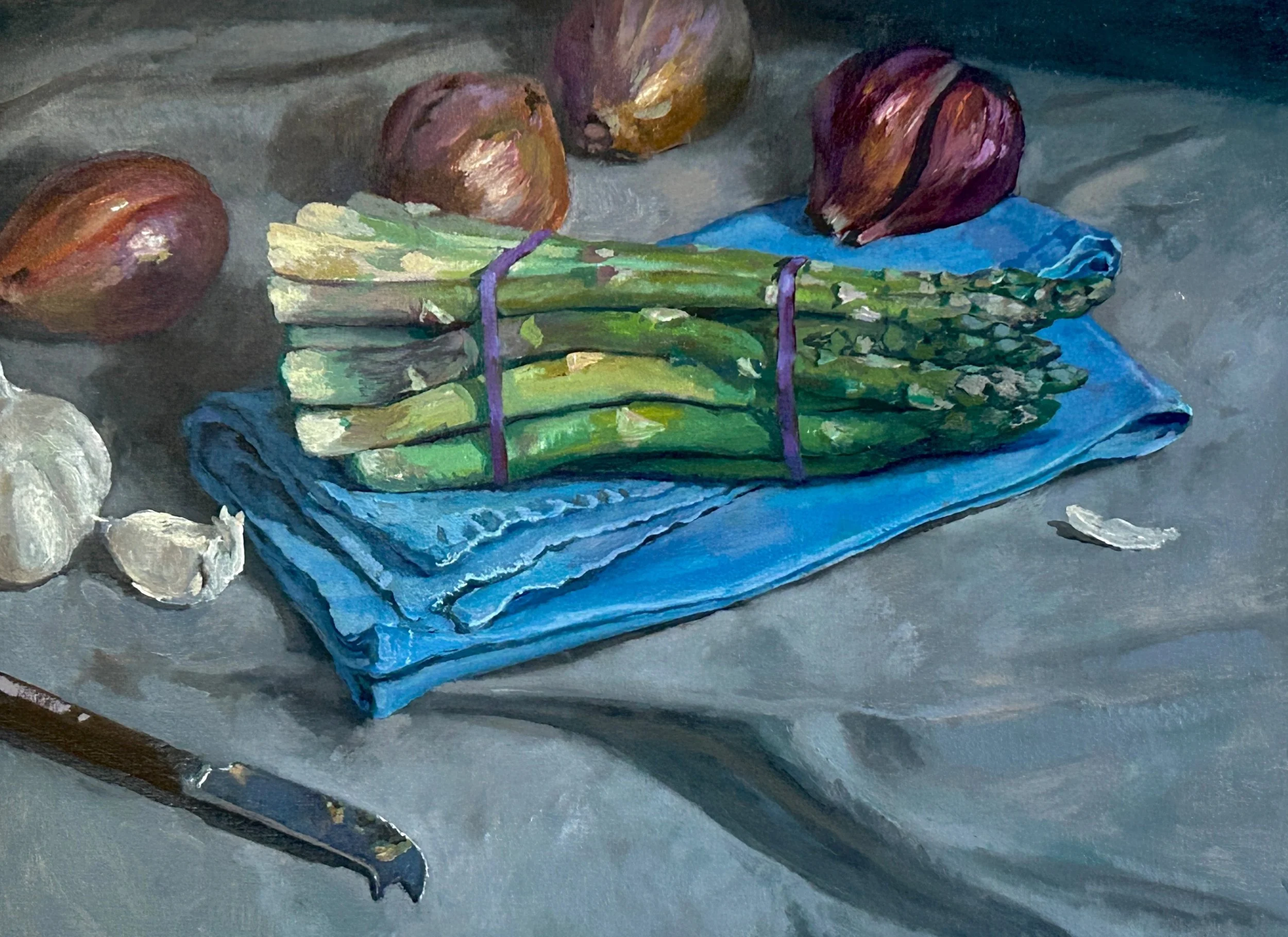
Asparagus and Shallots | Oil on Canvas | 18 x 24 inches | 2025
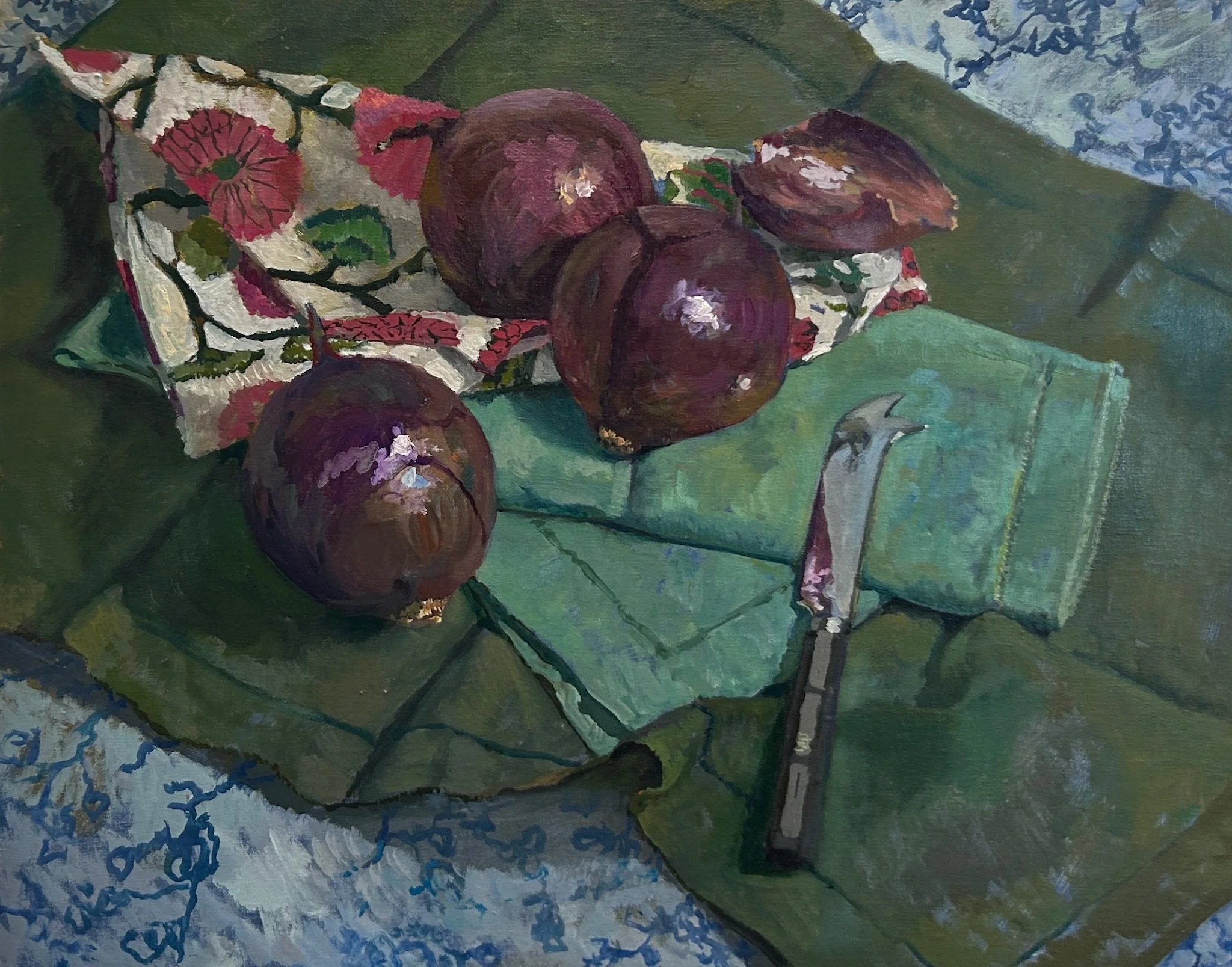
Red Onions | Oil on Canvas | 16 x 20 inches | 2026
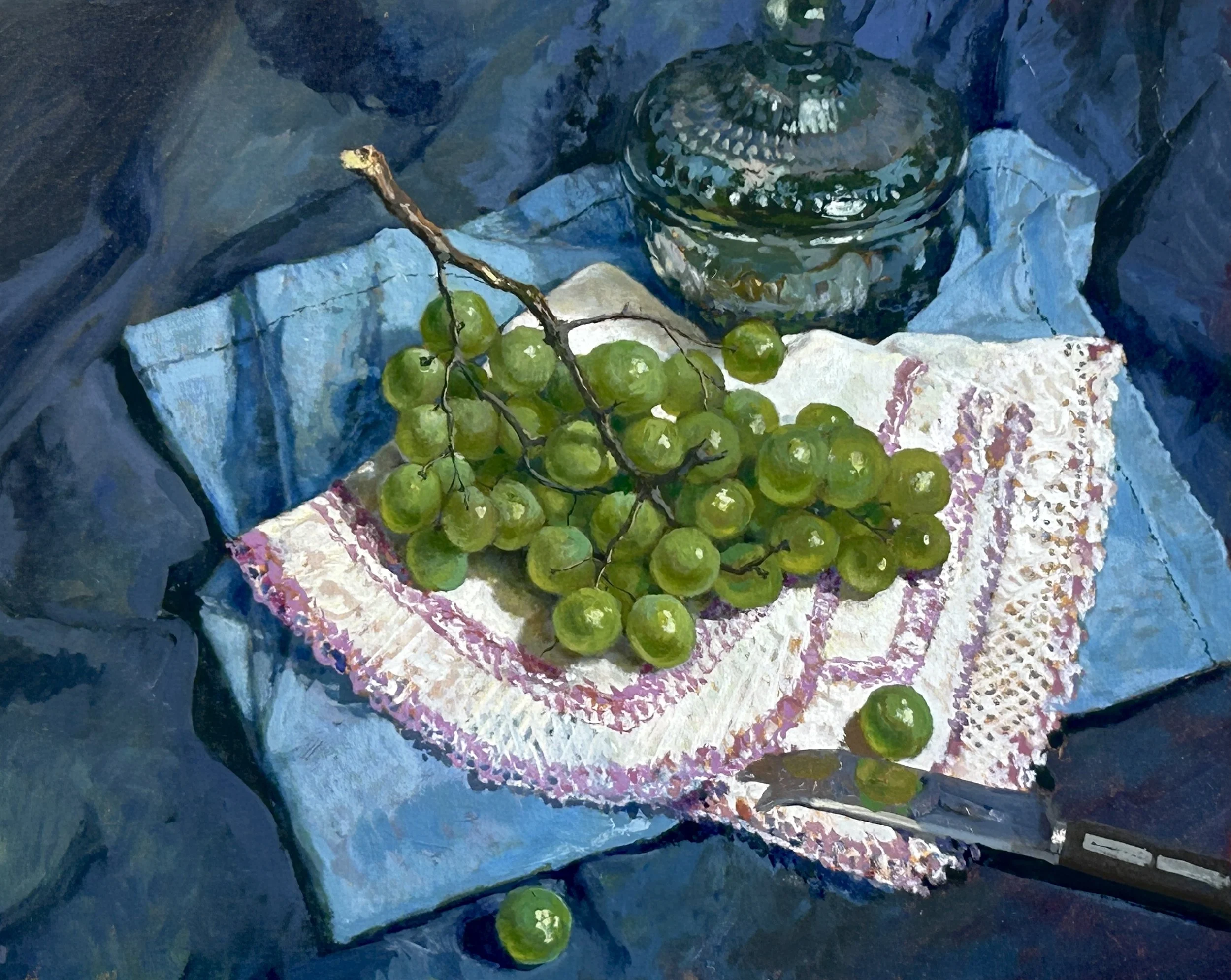
Still Life with Grapes | Oil on Canvas | 16 x 20 inches | 2026
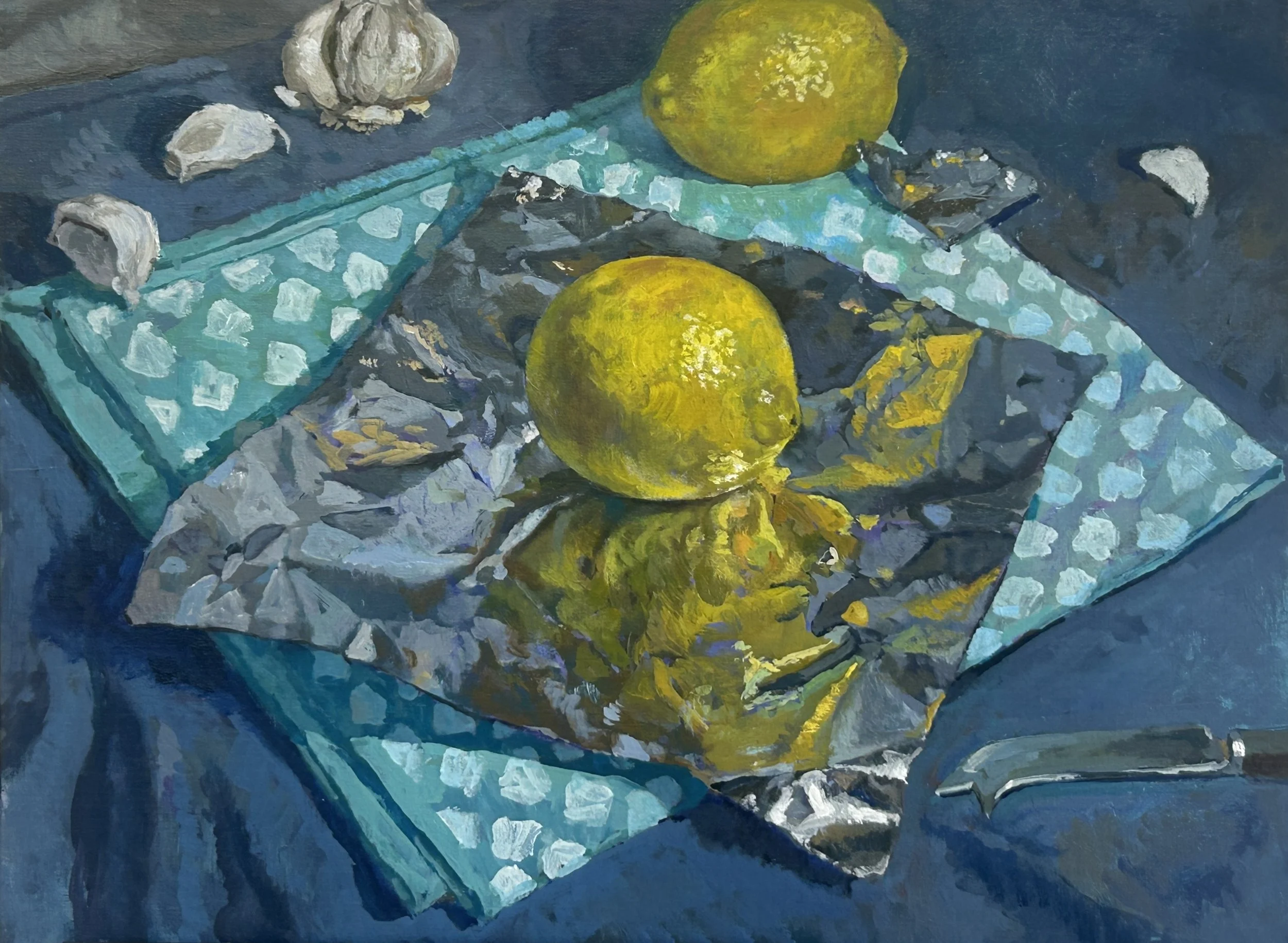
Lemon and Garlic | Oil on Canvas | 18 x 24 inches | 2025
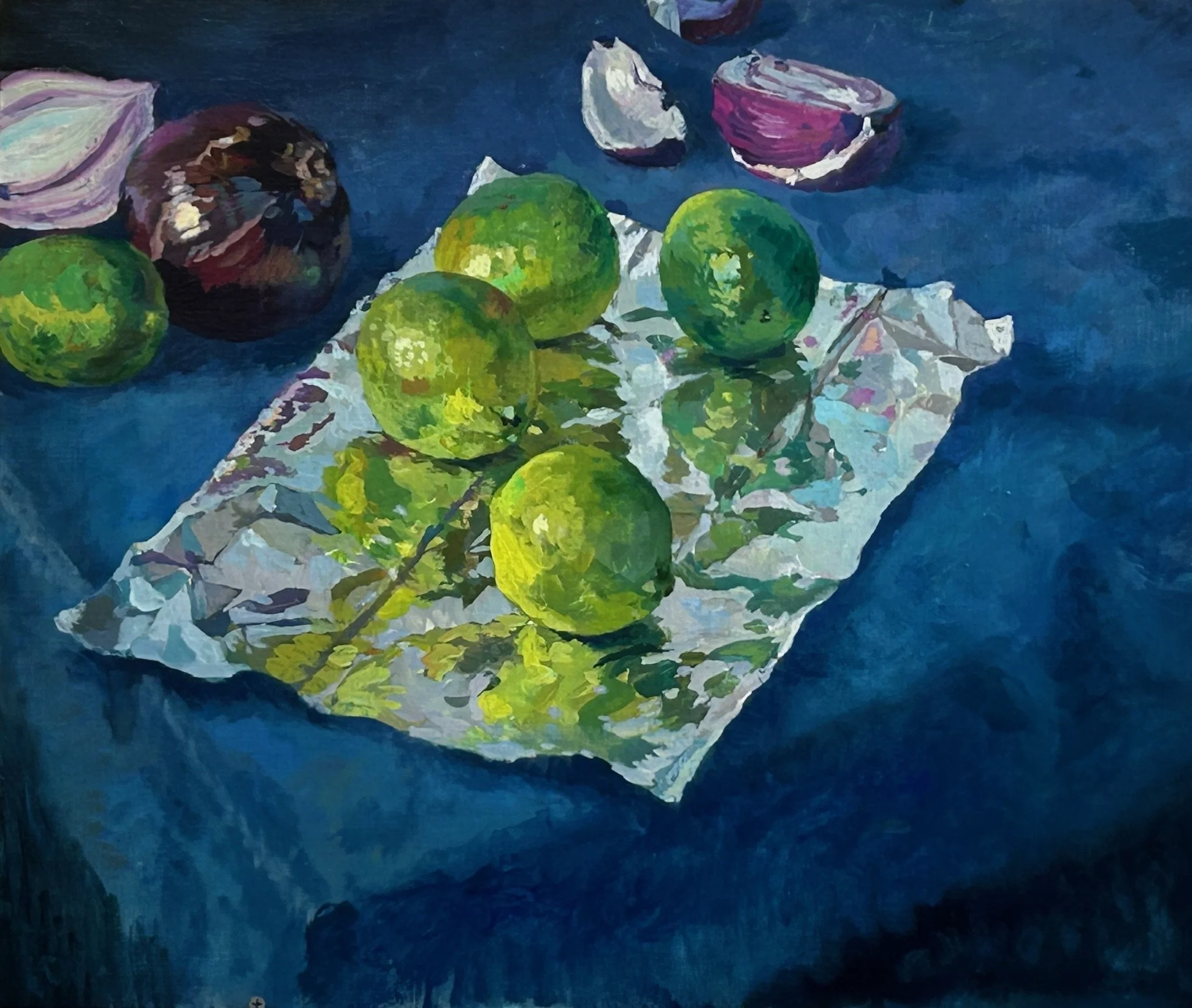
Limes and Onions | Oil on Canvas | 20 x 24 inches | 2025